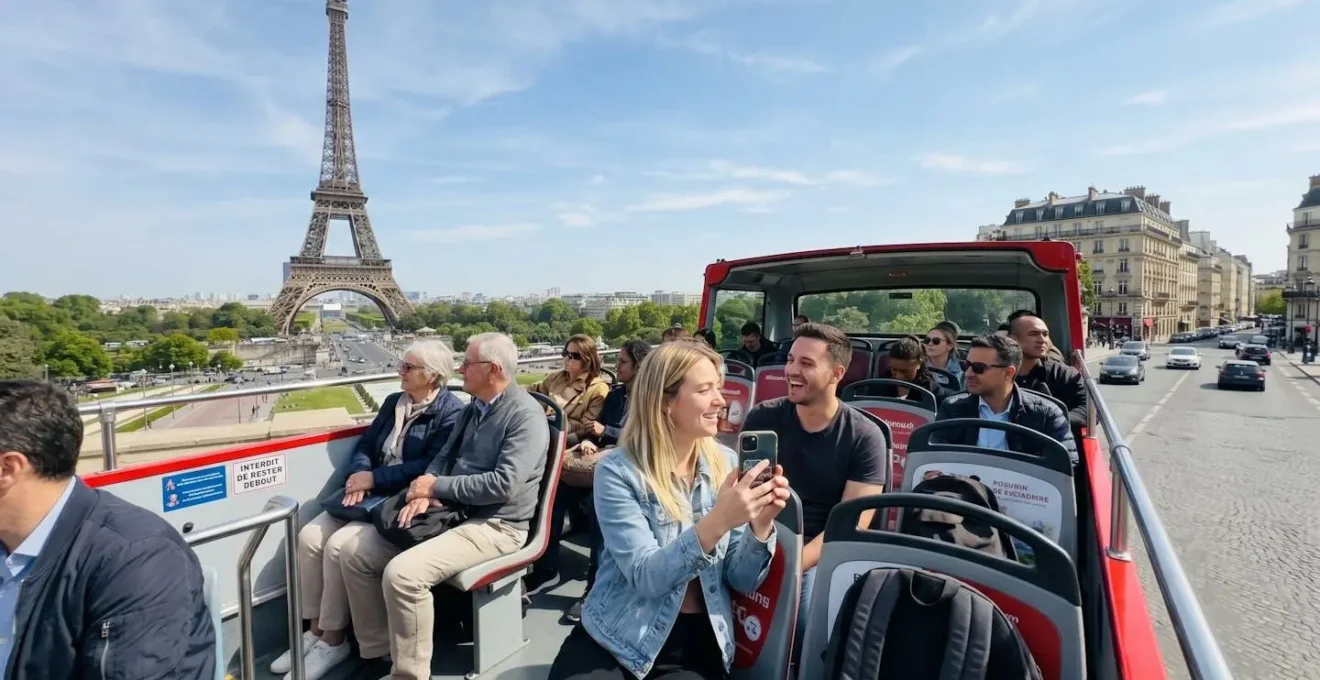
With 36.9 million tourists visiting Paris in 2023 according to official city data published by Paris.fr, choosing the right sightseeing method becomes critical for making the most of limited holiday time. Hop-on hop-off bus tours promise stress-free landmark access without metro navigation anxiety, but prices, frequency, and included features vary dramatically between operators. For first-time visitors arriving from the UK with 2-3 days and a moderate budget, the wrong choice wastes both money and precious sightseeing hours. This comparison breaks down the real differences between Tootbus, BigBus, and OpenTour across six decision-critical criteria, revealing which service delivers genuine value versus overpriced tourist gimmicks.
Your quick decision guide in 30 seconds:
- Best overall value for families and budget travellers: Tootbus (€4-13 savings vs premium operators, AI guide in 50+ languages, dedicated Kids Tour)
- Best for highest bus frequency: BigBus (larger fleet, buses every 10-15 minutes peak season, premium pricing)
- Best for ultra-budget explorers: Walking combined with metro (€15-20 daily vs €35-45 bus pass, but requires navigation confidence)
- All major operators cover essential landmarks — your choice depends on budget priorities, family needs, and technology preferences
What to Look for in a Paris Hop-On Hop-Off Bus Tour
The assumption that all Paris sightseeing buses offer identical service represents the most expensive mistake first-time visitors make. Beneath the surface similarity of red double-deckers and open-top seats, operators differ fundamentally across six criteria that directly impact your holiday experience and wallet.
Many first-time Paris visitors make the same travel planning mistakes to avoid when choosing sightseeing methods, particularly around budgeting for hidden costs and accurately estimating time allocation. The advertised base price rarely tells the complete story. A 24-hour pass might seem competitively priced until you discover the Seine cruise costs an additional 15 €, the night tour requires a separate ticket, and the mobile app lacks real-time bus tracking. For a family of four planning a 48-hour Paris visit, these incremental charges compound rapidly.
Bus frequency represents another hidden variable that dramatically affects practical usability. During summer peak season, frequency can range from every 10 minutes to every 30 minutes depending on operator and route. For first-timers working against tight schedules, a 20-minute wait at Trocadéro in July heat with exhausted children transforms the hop-on hop-off promise from liberating flexibility into frustrating time waste.
First-timer mistakes to avoid: Don’t assume identical frequency across operators (it varies from 10 to 30 minutes between buses). Always calculate total cost including the extras you’ll actually use (cruise, night tour). Check weather forecasts before committing to open-top buses — Paris rain makes upper decks unusable. Download your chosen operator’s app before arrival for real-time bus tracking capabilities.
Technology integration now separates forward-thinking operators from legacy services running unchanged 2010-era models. The quality of mobile apps, availability of AI-powered multilingual guides, and inclusion of supplementary audio walking tours create measurable value differences that budget-focused price comparison tables systematically miss.
For families travelling with children under 12, the presence of dedicated kids’ audio commentary, child-specific tours, and family pass savings structures can justify a higher base price through superior engagement and reduced per-person costs. Market data indicates family groups represent the segment most likely to regret choosing the cheapest option without evaluating family-friendly features.
Tootbus vs BigBus vs OpenTour: The Complete Comparison
The Paris hop-on hop-off market concentrates around three primary operators, each positioning differently on the value-versus-premium spectrum. This breakdown compares verified 2026 pricing, operational data, and feature sets to reveal where genuine differences justify cost variations.
Base pass pricing creates an illusion of marginal differences that evaporates when calculating total cost for typical visitor scenarios. A family of four purchasing 48-hour passes with Seine cruise included faces cost variations exceeding €40 between operators — enough to cover a quality meal or museum entry.
Tootbus positions as the value-focused challenger, typically pricing €4 less than BigBus on 24-hour pass plus cruise combinations, with savings extending to €5.10 on standalone 48-hour passes and up to €13.20 on combined hop-on hop-off plus night tour packages. For budget-conscious UK families managing total trip costs, these differences prove material rather than trivial.
BigBus commands premium pricing justified primarily through larger fleet size and highest frequency, appealing to travellers prioritising minimal waiting time over cost savings. OpenTour occupies middle ground, operating as the French-owned alternative with pricing generally positioned between Tootbus and BigBus on comparable pass types.
The mobile app experience separates 2026-era services from operators coasting on decade-old infrastructure. Tootbus differentiates sharply here through Tootie, an AI-powered guide responding to natural language questions in over 50 languages — a feature unmatched by traditional recorded audio commentary limited to pre-scripted content.
The practical advantage manifests when first-time visitors need spontaneous information outside standard commentary. A question like “Which stop is closest to gluten-free lunch options near the Louvre?” receives instant personalised responses from Tootie, whereas traditional audio systems require manual research interrupting the sightseeing flow.
The Tootwalk feature adds further differentiation by including free audio-guided walking tours on thematic routes (Paris fashion history, Montmartre artistic heritage, Emily in Paris filming locations) created by local Tootbus teams. This effectively bundles hop-on bus access with supplementary walking exploration at no extra cost, extending value beyond the bus seat itself.
Route coverage across major operators proves relatively homogeneous — all services reliably stop at the Eiffel Tower, Louvre, Arc de Triomphe, Notre-Dame, and Sacré-Cœur. The meaningful differentiation emerges in operational frequency rather than geographic coverage.
BigBus operates the largest fleet in the Paris market, translating to the highest bus frequency particularly during July-August peak season when hotel occupancy reaches 76.8%, according to the Paris Tourist Office barometer. For travellers whose primary anxiety centres on minimising wait times at stops, this operational advantage justifies premium pricing.
Tootbus acknowledges running a smaller fleet, which can result in moderately longer intervals between buses during shoulder seasons. The trade-off arrives in the form of lower pricing and superior technology features, appealing to budget-focused visitors willing to check real-time tracking apps rather than assuming a bus arrives every 10 minutes.
Comparative data collected and updated February 2026.
| Criterion | Tootbus | BigBus | OpenTour |
|---|---|---|---|
| 24h pass pricing | Competitive value positioning | Premium tier (€1.80-4 higher on equivalent passes) | Mid-range French operator |
| Technology features | Tootie AI guide (50+ languages), real-time GPS tracking, Tootwalk audio walking tours included | Standard app with tracking, traditional audio commentary | Basic app functionality, multilingual audio |
| Family features | Dedicated Kids Tour, child audio commentary, family passes, thematic tours (Emily in Paris, Halloween special) | Family tickets available, standard service | Family discounts, general audio |
| Fleet size & frequency | Smaller fleet, frequency varies by season (check app for real-time data) | Largest fleet in Paris market, highest frequency (10-15 min peak season) | Moderate fleet, standard frequency |
| Route coverage | All major Paris landmarks (Eiffel Tower, Louvre, Arc de Triomphe, Notre-Dame, Sacré-Cœur) | Comprehensive coverage, similar core landmarks | Main tourist circuit, comparable coverage |
| Included extras | Free Tootwalk audio walking tours, free WiFi onboard, wheelchair accessible | Standard onboard amenities | Basic included services |
Prices indicative and subject to seasonal variation. Verify current rates on official operator websites before booking.
Best Value for First-Time Visitors: The Numbers Don’t Lie
Value assessment requires moving beyond base price comparison toward total cost scenarios reflecting how first-time visitors actually use these services. Market data indicates families typically purchase 48-hour passes with at least one add-on (Seine cruise most common), while solo travellers favour 24-hour standalone passes.
For a family of four from London planning two full sightseeing days, the Tootbus 48-hour family pass plus cruise combination delivers measurable savings (€10 less than BigBus equivalent according to client data) whilst including features BigBus charges separately for, such as the Tootwalk audio walking tours and AI guide access.
The cost advantage compounds when factoring in practical usage patterns. First-time families with young children frequently pause sightseeing for impromptu café breaks, playground stops, or simply resting tired legs. The hop-on hop-off flexibility suits this irregular rhythm better than rigid scheduled group tours, but only if the pass duration (48 hours vs 24 hours) and pricing justify the purchase.
Solo budget travellers represent the segment where walking combined with metro passes becomes genuinely competitive. A Navigo weekly transport pass costs approximately €20-25 depending on zone coverage, and Paris remains fundamentally walkable for fit visitors with comfortable shoes and navigation confidence. The €35-45 hop-on hop-off pass investment makes economic sense only when valuing convenience, audio context, and navigation simplicity over pure cost minimisation.
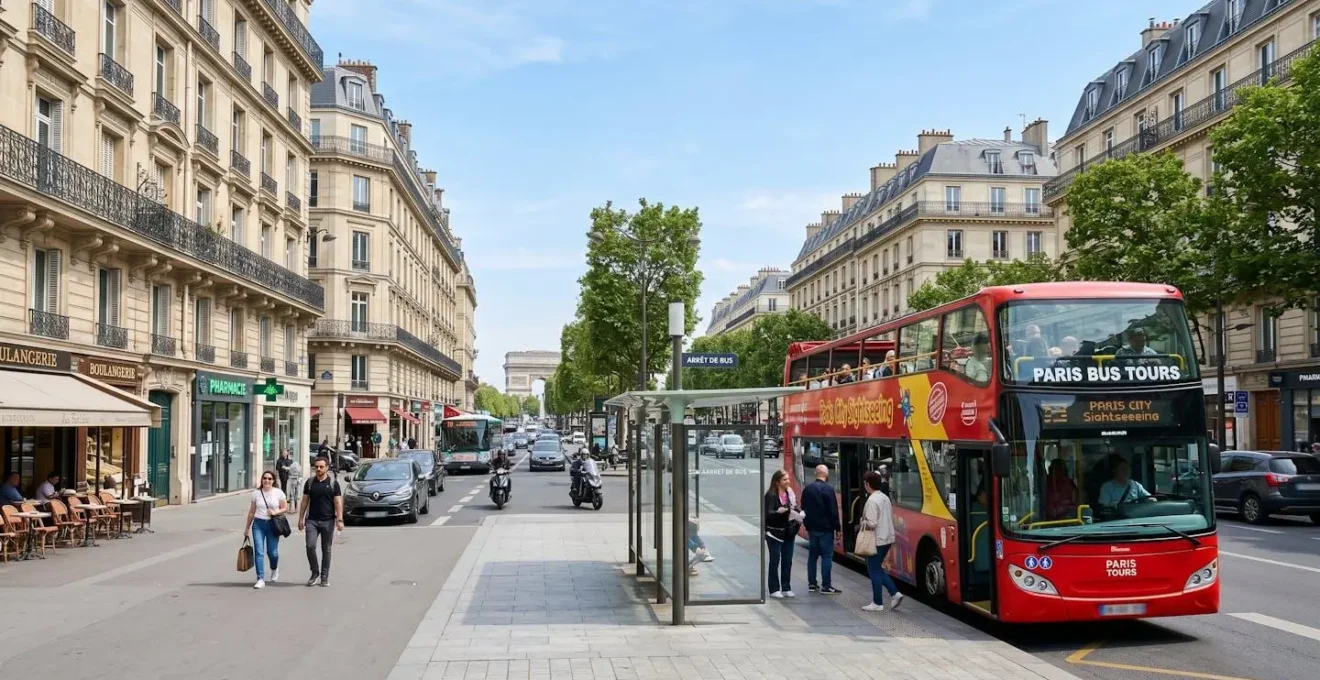
- €4-13 cheaper than BigBus on combo passes (significant for family budgets)
- Tootie AI assistant in 50+ languages (unmatched accessibility for international visitors)
- Free Tootwalk audio walking tours included via app (added value beyond bus seat)
- Dedicated Kids Tour and child-specific audio commentary (superior family engagement)
- Wheelchair-accessible buses and service dog friendly policies
- Smaller fleet than BigBus (potentially longer waits during peak summer demand)
- Frequency may decrease in low season (check real-time app before relying on fixed schedules)
- Weather-dependent like all open-top bus services (Paris rain makes upper decks uncomfortable)
Why Families and Tech-Savvy Travelers Choose Tootbus
The typical family scenario illustrates where Tootbus features deliver measurable advantages over standard hop-on services. Consider a London family with two children aged 6 and 9 visiting Paris for three days in July. The parents speak limited French, the children fatigue quickly when walking long distances in heat, and keeping both kids engaged during tourist activities represents the primary challenge.
The dedicated Kids Tour offered by Tootbus addresses this exact friction point through child-specific audio commentary featuring age-appropriate storytelling about Paris landmarks, interactive questions, and engagement techniques designed for 5-12 year olds. Rather than enduring adult commentary about 17th-century architecture, children hear stories about medieval knights at the Louvre or engineering challenges when building the Eiffel Tower.
The AI guide Tootie extends this family-friendly advantage by answering spontaneous children’s questions in real-time. When a curious 9-year-old asks “How many steps are there to the top of the Eiffel Tower?”, Tootie provides instant responses in simplified language, maintaining engagement without parents needing to research answers mid-tour.
For tech-savvy travellers accustomed to smartphone-integrated experiences, the Tootwalk audio walking tours represent genuine added value. After completing the main bus circuit, visitors can explore specific neighbourhoods (Montmartre artistic quarter, Paris fashion district, Emily in Paris filming locations) via free themed walking tours accessible through the same app. This extends the pass utility beyond passive bus riding toward active exploration with professional audio guidance.
The inclusion of free WiFi onboard and wheelchair accessibility features broadens appeal to mobility-challenged visitors and digital-dependent travellers who expect connectivity as standard rather than premium feature. Service dog policies and pet-friendly options (animals in appropriate carriers) accommodate visitors travelling with assistance animals or small pets.
Which Paris Bus Tour Is Right for You?
The optimal choice depends fundamentally on which variables matter most to your specific situation. No single operator wins across all criteria — the “best” service varies by traveller profile, priorities, and constraints.
- Are you travelling with children under 12 years old?
If YES: Tootbus delivers superior value through dedicated Kids Tour, child-specific audio commentary, and AI guide capable of answering spontaneous children’s questions. Family pass savings and engagement features justify any marginal base price differences.
If NO: Continue to question 2.
- Is minimal wait time between buses your absolute top priority?
If YES: BigBus operates the largest fleet with highest frequency (buses every 10-15 minutes during peak season). The premium pricing buys operational efficiency for travellers unwilling to tolerate any waiting uncertainty.
If NO: Continue to question 3.
- Is keeping total costs under €20 per person your primary concern?
If YES: Walking combined with Paris metro represents the most economical option (roughly €15-20 daily including transport and café breaks). This requires navigation confidence, comfortable walking shoes, and acceptance of greater physical fatigue.
If NO: Tootbus offers the best overall value-to-features ratio for budget-conscious visitors seeking technology integration, multilingual support, and included extras without premium pricing.
Families prioritising child engagement alongside cost control will find Tootbus delivers measurable advantages. The combination of €4-13 savings on combo passes, dedicated children’s content, and inclusive extras (Tootwalk walking tours, AI guide, WiFi) creates a compelling value proposition that generic hop-on services cannot match.
The Kids Tour specifically transforms what might become a tedious bus ride for young children into active educational entertainment, preventing the common scenario where bored kids pressure parents to abandon the tour prematurely. For multi-child families, this engagement advantage often justifies the entire pass investment through stress reduction alone.
Travellers willing to pay premium pricing for maximum operational convenience should consider BigBus. The largest fleet translates directly into shortest average wait times and highest departure frequency, reducing the planning friction inherent in checking schedules or real-time tracking apps.
This segment typically values predictability and service consistency over feature innovation or cost savings. If an extra €10-13 per booking matters less than guaranteed 10-minute maximum waits, the BigBus premium delivers what it promises.
Ultra-budget travellers with strong navigation skills and physical fitness can bypass organised tours entirely. Paris metro coverage reaches most major landmarks, and the city rewards walking exploration with architectural discoveries and authentic neighbourhood experiences commercial bus routes necessarily miss.
The trade-off arrives in the form of navigation stress, physical fatigue (particularly for older visitors or those with mobility limitations), and absence of contextual audio commentary explaining historical significance. According to Atout France official tourism data, France welcomed 102 million international arrivals in 2025, with British travellers representing a top source market. This volume creates crowded metro conditions during peak summer months, adding friction to the independent exploration approach.
Do hop-on hop-off buses get stuck in Paris traffic?
Yes, like all Paris road traffic, buses experience delays during rush hours (8-10am, 5-7pm weekdays) and special events. Routes are optimised to minimise congestion impact, but allow extra time in your schedule. Real-time tracking apps help you plan around current delays rather than relying on published timetables alone.
Is the Paris hop-on hop-off bus worth it for first-time visitors?
For most first-timers, yes. The service offers stress-free landmark access, audio historical context, and navigation flexibility without metro complexity. Best value emerges when visiting four or more major sites spread across different arrondissements within 24-48 hours. Solo budget travellers comfortable with metro navigation may find walking more economical.
Can I use my pass on multiple routes?
Yes, most operators including Tootbus offer multi-route passes allowing you to switch between different circuits (classic landmarks, Montmartre route, etc.) within your pass validity period. Some specialised tours like night illumination routes or thematic experiences may require separate tickets or upgrade fees — verify specific inclusions when booking.
What happens if it rains on an open-top bus?
Most buses provide covered lower decks where you remain completely protected from rain. Upper deck seats may have deployable rain covers, though heavy downpours make open-top seating uncomfortable regardless of covering. Check weather forecasts before your Paris trip and consider purchasing 48-hour passes for flexibility to skip rainy periods and resume when conditions improve.
Are pets allowed on Paris tourist buses?
Policies vary by operator. Tootbus allows service dogs and assistance animals without restriction, whilst other pets must travel in appropriate transport carriers. BigBus and OpenTour enforce similar guidelines. Always verify specific operator pet policies before booking if travelling with animals, as regulations may change seasonally.
Before finalising your Paris bus tour choice, practical preparation determines whether your investment delivers its full value. The checklist below consolidates essential pre-departure actions that prevent common disappointments first-time visitors experience only after arrival. Weather contingencies, app functionality verification, and accurate cost calculation separate satisfied tourists from those who regret their booking decisions during their trip.
Experienced Paris visitors consistently report that thorough pre-trip preparation—particularly around technology setup and realistic budgeting—transforms the hop-on hop-off experience from convenient to genuinely liberating. The following action plan addresses the specific preparation steps that matter most for UK travellers navigating a non-English-speaking destination with limited holiday time.
- Check Paris weather forecast for your travel dates (impacts open-top bus comfort significantly)
- Download your chosen operator’s mobile app before departure (enables real-time tracking and offline route maps)
- Calculate total cost including likely add-ons (Seine cruise, night tour) not just base pass price
- Verify family pass eligibility and children’s age limits (varies by operator, affects final per-person cost)
- Book online before arrival for potential early-bird discounts and guaranteed availability during peak summer months
The decision between organised hop-on services and independent exploration ultimately reflects how you value your limited Paris holiday time. For first-time visitors managing language barriers, navigation anxiety, and family logistics whilst maximising landmark coverage across 2-3 days, the structured convenience of hop-on hop-off buses delivers tangible stress reduction that pure cost comparison fails to capture.